Dragon

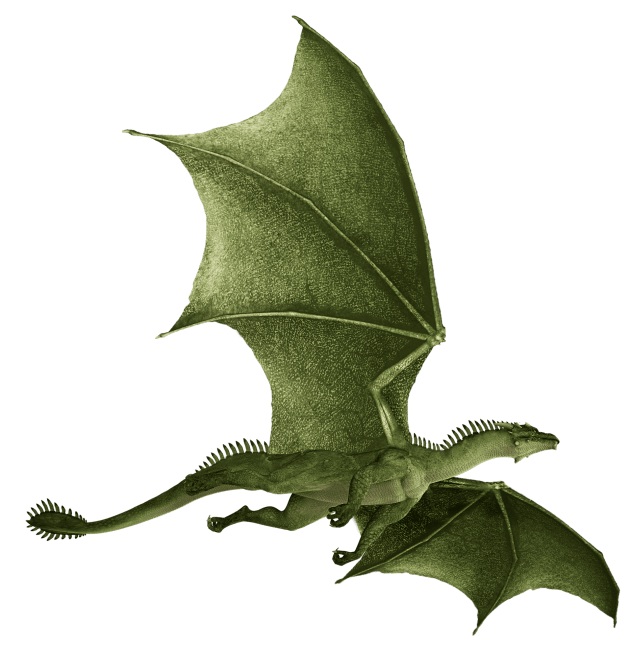
Dragons are mythical creatures. They breathe fire in our stories and fly through our imaginations. Sometimes they guard piles of gold and are slain by knights. In the old days, people used to believe in dragons. They were even displayed in maps! The poor dragons were blamed for many unpleasant things. In fact, most things that couldn’t be explained were blamed on dragons, such as disease, failing crops, bad weather and even war. Dragons as mythical creatures have appeared in most ancient cultures and traditions. They could be a force of good or evil, and live virtually anywhere: in lakes or the sea, in thunderclouds or caves. A common feature of dragons was that they could breathe fire and had enormous power. In many cultures, dragons were seen as the enemy of people. The Scandinavian hero Beowulf slew the monster Grendel, and also Grendel’s mother that attacked him. Many years later, he defeats a dragon and gets mortally wounded in the battle. In an ancient Babylonian story, the god Marduk famously conquers the dragon and monster of primaeval chaos, Tiamat.
Skin-walker
About

A dragon is also featured in Greek mythology, where it fought for the Titans and attacked Athena. The dragon was eventually defeated and banished to the heavens, becoming a star. One of the challenges that Hercules faced was slaying the dragon Ladon. The legend of Saint George and the Dragon tells the story of Saint George, who tamed and slayed a dragon that was demanding human sacrifices. He killed the dragon to save a princess and protect a village from the fearsome creature. After his amazing feat of bravery and strength, Saint George became the patron saint of England. Saint George's Day is celebrated every year on the 23rd of April.The life of a dragon in mythology is much longer than that of a human. On average, dragons are believed to live 1,200 human years – more than 12 human lifetimes! During that life, they learn a lot about the world and the creatures within it. For example, they might need to know about the gold and jewels that they hoard, or about the potential threats that might come to steal their wealth. Learning and education is very important in the life of a dragon. The life of a dragon starts with an egg. They go through twelve different life stages, according to some sources of dragon mythology. These stages include wyrmling, juvenile, adult, and Great Wyrm, although different sources call some stages by different names. Here are the main stages of the life of a dragon: Hatching. Dragons hatch from eggs by eating their way out of the shell and breaking it at the sides. Wyrmling. This is the name for a newly hatched dragon. Even though it is small and weak compared to an older dragon, it can still take care of itself. It can fly a day or two after hatching. Adult. An adult dragon is a scary creature. They spend a lot of time hoarding treasure or moving to new homes. They are most likely to fight with other dragons. Ancient. This is a later life stage of a dragon when it is strong and powerful. Some dragons spend this stage of their life hibernating. Twilight. This is the final stage before the life of a dragon comes to an end. During the twilight phase, a dragon grows weaker and sleepier. Eventually, it dies at the end of a very long life. After the egg hatches, the dragon emerges ready to face life. Shortly after it is hatched, it is ready to fight and fly. It continues growing until it is more than 200 years old, at which point it becomes a mature dragon. Dragons are mortal and cannot live forever. The life of a dragon comes to an end after the twilight stage. Dragon graveyards cannot be found on maps, but they are believed to be on mountaintops and in hidden valleys the are only accessible to flying creatures. In most stories and myths, dragons breathe fire! But how do they do this? One theory to explain fire-breathing is that dragons go through a similar process to what makes humans burp or trump. Gases produced by digestion (hydrogen and methane) are stored in their body to be released later. The way they expel this excess gas in their system is not through burping, but through breathing fire! Let’s explore how this works below. Dragons have two kinds of teeth because they are omnivores - meaning they eat both animals and plants. They have sharp teeth for eating meat and flat teeth for eating plants. Some people who write about dragons think that dragons could use their flat teeth to grind rocks, which sounds like a strange thing to do, but other animals, like birds, grind rocks to help with digestion. Grinding rocks can help with digestion due to the two different stomachs that birds have. One stomach acts the way that the human stomach does, breaking down food with acid. The other one grinds hard food items, such as bones or seeds, against the rocks to break them down. Dragons may have a similar digestion process to birds, meaning that when a dragon grinds up rocks, there would be a residue left on its teeth. For rocks rich in metals, this metallic residue would mix with oxygen in the air and also with the gases released by digestion to produce fire!

Movies

Game of Thrones

House of Dragon

The Hobbit

The Desolation of Smaug

Recommend